Skip to content
by David Wm Brown Middletown RI August 2025
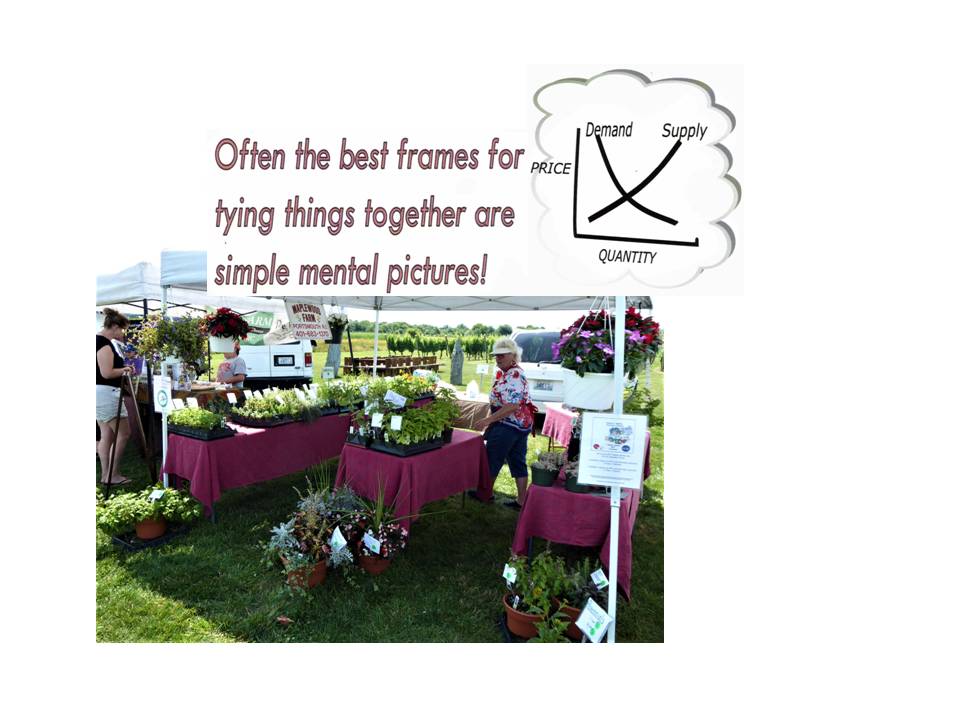
We applied economists like to frame people. It drives us nuts to have long meandering discourses or polarizing debates, with few helps for pinpointing the most relevant aspects and tying them together.
But in turn, many economists drive people nuts by talking high in the abstract clouds, using math-laden models. Why not start with real-world people and place situations? Then back away a bit to view in perspective? If existing theories and analytical methods don’t fit, fashion fresh approaches? And explain to others in straightforward ways?
Here are short write-ups and visuals found useful in my multi-disciplinary teaching, outreach, and advisory roles in the U.S. and abroad. Some boil down the writings of others. Some have been fashioned by myself.
Let me know (email djbrown2d@yahoo.com), and I’ll be glad to try to relate these and other materials to your special needs and interests.

Highlighted
Albert Hirschman’s Exit, Voice & Loyalty This Trump-2 era has brought heavy pressures, cutbacks and re-shapes of aims and means. Many public- and private-sector leaders, staff, contractors, and grant recipients are facing tough choices about if or not to go with the flow. Hirschman’s way of framing still provides very helpful starting-points for coming to grips with such choices.
Summer 2025 finds us with lots of talk and threats involving higher tariffs and counter-tariffs. Media headlines tend to amplify more than explain. Students and leaders would be well served if they brush up on the basics of potential benefits and downsides of trade, tariffs and related responses. Here’s a short set of visuals about Conscientious Trade that I’ve used in my explanations. It’s pretty primitive but folks in my spheres seem to find it helpful as a diagnostic backdrop.
Via the Economics in Context initiative, a team with Boston U and Tufts is showing how meaningful economics analysis goes beyond markets and profits to show how key entities can help human wellbeing in sustained ways.
Kate Raworth’s Doughnut Economics Highlights outer ecological limits and inner bounds of human needs. She is reaching out to students with animations, and incorporating their fresh ideas.
Whitehead’s Rhythm of Education romance > precision > generalization Written a long time ago, but still useful for students as well as teachers.
Farm economic planning My compilation of budgeting and other practical tools that new-era farm families and their advisers can use to help avoid costly mistakes.
Earlier write-ups by me that still seem useful